
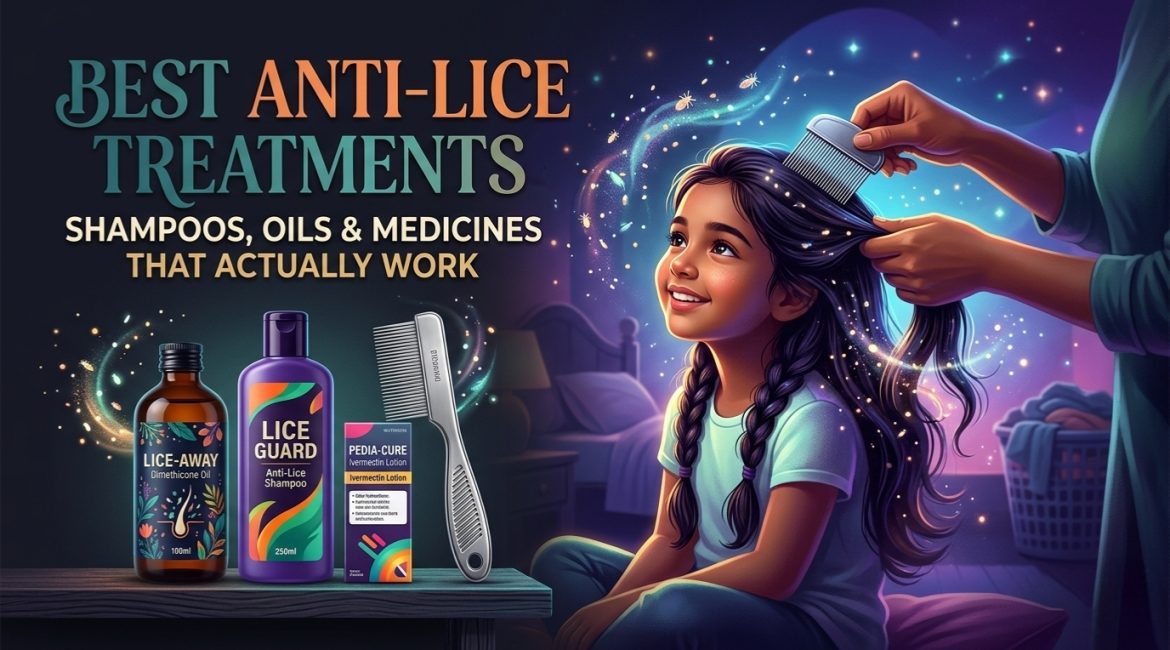
Dealing with head lice can feel like an exhausting, uphill battle. Just when you think you’ve cleared them out, a missed egg hatches, and the cycle begins all over again. However, with a clinical approach and the right products, you can eliminate an infestation effectively.
Here is a guide to the treatments that are proven to work, ranging from over-the-counter staples to prescription-strength solutions.
1. Over-the-Counter (OTC) Chemical Shampoos
OTC treatments are usually the first line of defense. Most contain pyrethrins (derived from chrysanthemum flowers) or permethrin (a synthetic version).
These act as neurotoxins that paralyze and kill live lice. However, in recent years, some lice populations have developed resistance—often called “Super Lice.” If you don’t see results after the first application, you may be dealing with a resistant strain.
Pro Tip: Always perform a second treatment 7 to 9 days after the first. This kills any lice that hatched from surviving eggs before they are old enough to lay new ones.
2. Physical Suffocation Agents
Because of chemical resistance, many experts now recommend mechanical killers. These products don’t poison the lice; they physically disable them.
Dimethicone: This is a non-pesticide silicone oil. It coats the lice and blocks their breathing holes, essentially suffocating them. It is highly effective and has a lower risk of skin irritation compared to chemical pesticides.
Benzyl Alcohol Lotion: This prevents lice from closing their respiratory spiracles. When they try to breathe, the lotion clogs their system, causing them to choke.
Essential Oils: While tea tree, eucalyptus, and neem oils are popular natural alternatives, clinical evidence is mixed. They may work better as repellents than as a primary treatment for a heavy infestation.
3. Prescription-Strength Medicines
If OTC options fail, a doctor can provide stronger medications that tackle resistant infestations.
Ivermectin Lotion: This is a modern favorite because it often requires only one application. It paralyzes the louse and prevents it from surviving.
Spinosad Suspension: Derived from soil bacteria, this is unique because it kills both live lice and the unhatched eggs (nits). This often eliminates the need for the tedious “nit-picking” process.
Malathion Lotion: This is a powerful treatment, but it must be used with extreme caution. It is flammable and should never be used near hair dryers or open flames.
4. The Essential Tool: The Fine-Toothed Comb
Regardless of which liquid treatment you choose, manual removal is the most reliable way to ensure success. No treatment is 100% effective at killing every single egg.
Wet Combing: Apply a thick conditioner to wet hair to slow the lice down. Use a high-quality metal nit comb rather than plastic. Metal teeth are closer together and often have micro-grooves that “scrape” the eggs off the hair shaft.
Sectioning: Divide hair into small sections and comb from the scalp to the very ends. Wipe the comb on a white paper towel after every swipe to monitor your progress.
5. Common Myths and Mistakes
Myth: Lice prefer dirty hair. In reality, lice find it easier to attach to clean hair shafts. They do not discriminate based on hygiene or socioeconomic status.
Mistake: Treating the whole house. Lice cannot jump or fly; they only move through direct head-to-head contact. They die within 24 to 48 hours without a human host. Focus your energy on the head, then simply wash bedding and hats in hot water (at least 60°C).
Mistake: Using home remedies like Mayonnaise. While these might suffocate some lice, they are messy, difficult to wash out, and significantly less effective than medical-grade dimethicone.
Summary for Success
To win the war against lice, identify the infestation early, choose a treatment based on the severity, and commit to the 9-day follow-up. Persistent combing and monitoring for two weeks following the final treatment is the only way to ensure the infestation is truly gone.
